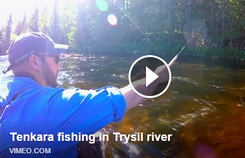
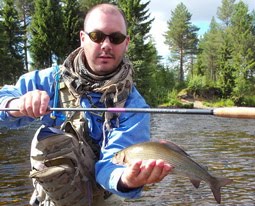
Fish with a System and Increase Your Catch Rate.
by Chris Hendriks, NL

One day my son and I went out on a fishing trip. He is new to the world of fly fishing but very interested in tenkara and learned a lot very quickly. But it happened twice that I was catching a lot more fish the he was. Although he put a lot of effort into his fishing and was doing everything right. We also read the water together and he can almost read the water completely by himself.... READ >>


Kebari Flies:
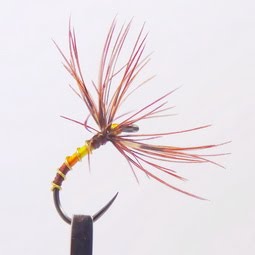
I think kebari must be and can be very simple. Three components are enough: hook, feather and thread. This year searching for an effective kebari color I’ve experimented a lot with multicolored threads by Mettler . Now that the season is over and I can conclude that some patterns have passed the seasonal tests with the great success. The champion is in the picture. I call it
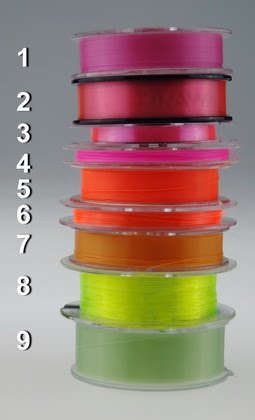

Tenkara Level Lines
quick guide:

1 - NISSIN PALS
2 - DAIWA
3 - Sunline TORNADO
4 - YGK
5 - LineSystems Tenkara FC
6 - Sunline Buttobi
7 - SANYO Valcan Applaud
8- YAMATOYO
9 - SANYO Valcan Applaud green

The best  tenkara level lines are produced with the fluorocarbon material with the density 1.78. The difference in suppleness and memory is very small; the main difference is the color and visibility. The line visibility is very important for tenkara fishing. Different colors give you the variety of the opportunities to monitor your line’s position in the air and against the background of the water and the banks.


Tenkara Casting Technique Observations.

by David Walker, US

Casting the line with a Tenkara rod is in many ways a paradox. Some people can cast a line the length of the rod fairly well after only a few casts.  Other people struggle to cast the line and have the line extend more than one meter beyond the end of the rod. The paradox is the harder they try to cast the line the less success they have.

This summer will be my sixth year Tenkara fishing. I am completely self-taught. Learning on my own how to cast by watching YouTube videos, trying to duplicate their casting motion and timing, reading what others have written about proper casting, and by trying to analyze what I think happens during my casting, and what should happen. What works and what does not work.... READ>>
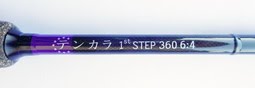


1stStep 360 Rod Edition Y2017.
by Oleg Stryapunin, CZ

I want the angler’s first step into tenkara fishing to hook him, so I consider 1stStep 360 to be the most important rod in The Tenkara Times product line. This rod provides an easy entry point due the price, but it has the casting feel and accuracy of some more expensive rods. The redesigned Y2017 1stStep 360 features an updated new look with a gloss finish and 3D-look carbon cosmetics near the grip.
READ>>


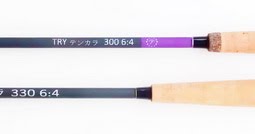
New TRY テンカラ 300 rod
by Oleg Stryapunin, CZ

The TRY300 rod is an update to the TRY330 and it retains the best qualities of its predecessor. Much thought and design consideration went into the original TRY330 and that continues with the TRY300.
The TRY300 is very light, weighing only 56 grams and with a center of gravity of 55cm and rotational moment of 3.08 it feels extremely light in the hand.

The rod blank is painted matte grey without accents. Since small stream tenkara fishing typically happens at very short distances this muted color is stealthy and spooks fish much less than a bright and glossy rod can. The rod’s light weight allows you to comfortably grip the rod by the butt and is the reason we use a short handle with only the single profile bump. The true rod length is 3.06 meters so the new model name of TRY300 now more accurately indicates the rod’s actual length.

The best way to appreciate TRY300 is to cast it and fish it. We hope you’ll like the new rod.

Tenkara casting is often described as deceptively simple, and yet the experience of picking up a tenkara rod for the first time can be humbling. Many beginners expect a long learning curve similar to other fishing methods, but the rod itself is stripped down to a line, a tip, and a flexible telescoping section that rewards smooth motion. Casting becomes a conversation between angler and water, where rhythm matters more than force and small adjustments replace the brute strength used in conventional casting. The result is a style of fishing that feels light, intuitive, and surprisingly accessible once the basics click into place.

The gear associated with tenkara is intentionally minimal, which is part of its appeal. A telescoping tenkara rod collapses to a compact length that fits in a backpack, a vest pocket, or even a large coat, making it a natural companion for anglers who travel light or hike into remote streams. There are no reels to maintain, no complicated tackle boxes to organize, and very few moving parts that can fail in the field. Instead, attention shifts to choosing a suitable line, a well-tied kebari, and the small accessories that make a day on the water more comfortable and productive.

Tenkara lines are a quiet but important part of the system, and choosing the right line can transform how a rod feels in hand. Lighter lines suit delicate presentations on small streams, while heavier lines help push a kebari into pocket water and across stronger currents. Anglers often experiment with different lengths, tapers, and thicknesses before settling on a personal favorite that matches their casting style and the waters they fish most often. The line is the bridge between the rod tip and the fly, and a thoughtful choice can make casting smoother and landings gentler.

Kebari are the traditional flies of tenkara, and they reflect a philosophy as much as a pattern. Most kebari are soft-hackled, designed to move subtly in the current rather than to imitate a single insect perfectly. This movement, sometimes called pulsing or breathing, seems to trigger strikes from fish that are feeding selectively or simply responding to movement in the water. Patterns range from simple wool-bodied bugs to more elaborate designs, and many anglers enjoy tying their own as a way of deepening their connection to the method.

Casting technique in tenkara often comes down to tension, timing, and a willingness to relax. Overcasting is a common pitfall, where the angler tries to muscle the line into the air rather than letting the loaded line unroll on its own. Practicing with a short length of line first helps build muscle memory without the frustration of tangles. Watching experienced casters, whether in person or through short tutorial videos, can offer clues about body position, pause length, and the gentle acceleration that carries the line out to its target.

Reading water is a skill that tenkara anglers tend to develop quickly, because the simple rig places them closer to the stream and its structure. A bend in the current, a seam between fast and slow water, a submerged rock creating a small cushion of calm behind it, all of these become obvious targets for a kebari. Without the noise of a reel and the bulk of a heavy rod, the angler can move along the bank more quietly and notice subtle features that might otherwise be overlooked. This attention to water often becomes as satisfying as the fishing itself.

Tenkara has a global community that reflects how portable and universal the method really is. Anglers in Japan have practiced a form of fixed-line fishing for centuries, while modern tenkara has spread through online forums, blogs, and gatherings in Europe, North and South America, Australia, and beyond. This blend of traditional roots and contemporary exchange creates a culture where techniques, patterns, and stories are shared openly. Beginners can find welcoming voices willing to answer questions, point to useful resources, and share lessons learned on streams far from home.

Learning tenkara well often means slowing down, both in casting and in the day itself. A simple rod encourages a more contemplative pace, where each cast is an opportunity to observe the water and adjust. Standing still for long stretches, watching the kebari drift, and studying where fish rise are all part of a rhythm that rewards patience. Anglers who carry this pace into other parts of their fishing often find that it sharpens their senses and deepens their appreciation of the streams they visit.

Accessories for tenkara are small but thoughtful, and they tend to focus on comfort and convenience rather than complexity. Rod cases, line holders, spools for spare tippet, hemostats, and small nets all earn their place in a pack because they solve common problems without adding weight. Many anglers keep a compact repair kit with them in case a section of line or a tippet connection needs attention. A well-chosen set of accessories quietly supports a day of fishing and helps the angler stay focused on the water rather than on gear.

Tenkara as a practice continues to evolve, with writers, anglers, and craftspeople contributing new perspectives on technique, gear, and tradition. Online libraries, tutorial archives, and personal blogs have become valuable spaces for sharing observations and inviting newcomers into the conversation. As more people discover the simplicity and reach of a single rod, a line, and a fly, tenkara seems likely to keep growing as both a method of fishing and a way of connecting with rivers, streams, and the people who care about them.


Recent Tenkara Videos:

Chris Hendriks, NO

Alexander Vlasov, BY,
Tenkara fishing in Sweden:

Masami Sakakibara, JP,
How to clean up tenkara rods:
Christophe Laurent, FR, tenkara fishing in Normandie after the rains:

Tom Davis,  US: this video illustrates the tenkara tactics perfectly:


Lucas Bauer, AT :

Carlos Andre Blatt, BR:

Tom Davis, US: