Fish with a System and Increase Your Catch Rate.
by Chris Hendriks, NL

One day my son and I went out on a fishing trip. He is new to the world of fly fishing but very interested in tenkara and learned a lot very quickly. But it happened twice that I was catching a lot more fish the he was. Although he put a lot of effort into his fishing and was doing everything right. We also read the water together and he can almost read the water completely by himself.... READ >>


Kebari Flies:
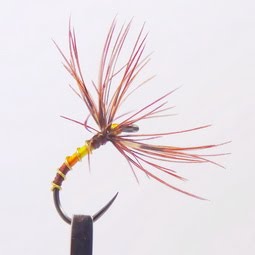
I think kebari must be and can be very simple. Three components are enough: hook, feather and thread. This year searching for an effective kebari color I’ve experimented a lot with multicolored threads by Mettler . Now that the season is over and I can conclude that some patterns have passed the seasonal tests with the great success. The champion is in the picture. I call it
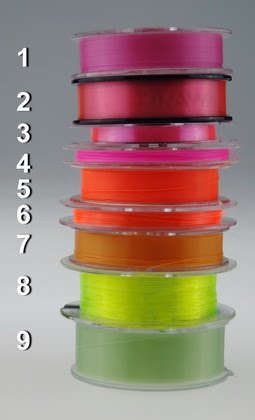

Tenkara Level Lines
quick guide:

1 - NISSIN PALS
2 - DAIWA
3 - Sunline TORNADO
4 - YGK
5 - LineSystems Tenkara FC
6 - Sunline Buttobi
7 - SANYO Valcan Applaud
8- YAMATOYO
9 - SANYO Valcan Applaud green

The best  tenkara level lines are produced with the fluorocarbon material with the density 1.78. The difference in suppleness and memory is very small; the main difference is the color and visibility. The line visibility is very important for tenkara fishing. Different colors give you the variety of the opportunities to monitor your line’s position in the air and against the background of the water and the banks.


Tenkara Casting Technique Observations.

by David Walker, US

Casting the line with a Tenkara rod is in many ways a paradox. Some people can cast a line the length of the rod fairly well after only a few casts.  Other people struggle to cast the line and have the line extend more than one meter beyond the end of the rod. The paradox is the harder they try to cast the line the less success they have.

This summer will be my sixth year Tenkara fishing. I am completely self-taught. Learning on my own how to cast by watching YouTube videos, trying to duplicate their casting motion and timing, reading what others have written about proper casting, and by trying to analyze what I think happens during my casting, and what should happen. What works and what does not work.... READ>>
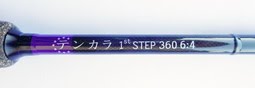


1stStep 360 Rod Edition Y2017.
by Oleg Stryapunin, CZ

I want the angler’s first step into tenkara fishing to hook him, so I consider 1stStep 360 to be the most important rod in The Tenkara Times product line. This rod provides an easy entry point due the price, but it has the casting feel and accuracy of some more expensive rods. The redesigned Y2017 1stStep 360 features an updated new look with a gloss finish and 3D-look carbon cosmetics near the grip.
READ>>


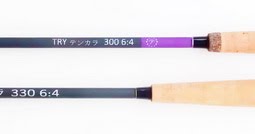
New TRY テンカラ 300 rod
by Oleg Stryapunin, CZ

The TRY300 rod is an update to the TRY330 and it retains the best qualities of its predecessor. Much thought and design consideration went into the original TRY330 and that continues with the TRY300.
The TRY300 is very light, weighing only 56 grams and with a center of gravity of 55cm and rotational moment of 3.08 it feels extremely light in the hand.

The rod blank is painted matte grey without accents. Since small stream tenkara fishing typically happens at very short distances this muted color is stealthy and spooks fish much less than a bright and glossy rod can. The rod’s light weight allows you to comfortably grip the rod by the butt and is the reason we use a short handle with only the single profile bump. The true rod length is 3.06 meters so the new model name of TRY300 now more accurately indicates the rod’s actual length.

The best way to appreciate TRY300 is to cast it and fish it. We hope you’ll like the new rod.

Tenkara casting rewards a relaxed approach over forceful effort. Many newcomers discover the rhythm quickly, while others find that the harder they try to fling the line, the less progress they make. Letting the rod load naturally, rather than pushing the cast, tends to produce longer and more accurate presentations. Watching experienced anglers and letting the motion settle into a calm tempo often does more for early success than drilling on technique alone. Patience, observation, and a light touch on the grip help the rod do the work, turning casting from a struggle into a smooth, repeatable motion.

A tenkara rod is a long, telescoping cane designed to simplify fly fishing by removing the reel and most of the hardware. With only a line connected to the tip, the angler relies on the flex of the rod to load and deliver the cast. This stripped-down setup keeps gear light in the hand and easy to carry into remote streams. The simplicity invites a quieter style of fishing, where the focus shifts toward reading water, matching water, and rhythm. Beginners often appreciate how little there is to manage, while seasoned anglers enjoy returning to the fundamentals of presentation and timing.

Kebari are the traditional Japanese flies commonly associated with tenkara, though any small soft-hackled pattern can serve the same purpose. Their sparse profile and lively movement in the current imitate a wide range of stream insects, making them surprisingly versatile. Anglers often carry a modest selection rather than a large box, trusting a few proven patterns to cover most situations. Tying kebari is a craft in itself, with a long history of regional styles and materials. Whether purchased or tied at the vise, these flies reflect tenkara's broader philosophy of simplicity, observation, and working with what the stream offers.

Choosing a tenkara rod line and why a line matters as much as the rod itself. Lines come in different lengths, weights, and tapers, each suited to particular rod actions and fishing situations. A well-matched line loads the tip smoothly, allowing delicate presentations at short range and longer casts when needed. Anglers often experiment to find a combination that feels balanced in the hand. Visibility on the water, turnover of light leaders, and how the line behaves in wind all factor into the choice. Treating the line as part of the system, rather than an afterthought, opens up new possibilities.

Tenkara accessories keep the kit compact and travel-ready. A simple line holder, a few spare spools, and a small retractor for nippers and forceps cover most needs on the water. Many anglers also carry a small cloth for drying flies and a lightweight hat or pack for changing weather. Because the gear list is intentionally short, each item earns its place. Choosing well-made, field-tested accessories helps the day run smoothly, whether fishing a familiar stream or exploring new water. The aim is to carry less, worry less about gear, and spend more time focused on the water and the fish.


Recent Tenkara Videos:

Chris Hendriks, NO

Alexander Vlasov, BY,
Tenkara fishing in Sweden:

Masami Sakakibara, JP,
How to clean up tenkara rods:
Christophe Laurent, FR, tenkara fishing in Normandie after the rains:

Tom Davis,  US: this video illustrates the tenkara tactics perfectly:


Lucas Bauer, AT :

Carlos Andre Blatt, BR:

Tom Davis, US: