As a newcomer to tenkara fishing and an old hand at the
tying bench something that intrigued me from the outset was the “One Fly”
approach.
Fishing with just one fly pattern is a strange concept for most fly fishermen who have grown up with “Match The Hatch”. Although curious about this I simply couldn’t imagine spending hours at the tying bench during winter filling my box with the rows and rows of the exact same fly.
While learning tenkara I wanted to stick as closely as I
could to the traditional flies and techniques used, this demanded a lot of
research and it gave me time to develop my own approach to the “One Fly”. I
began to ponder if it was possible to combine the one fly approach with
matching the hatch, the way I managed to do this was to use the Sakasa Kebari
as a template.
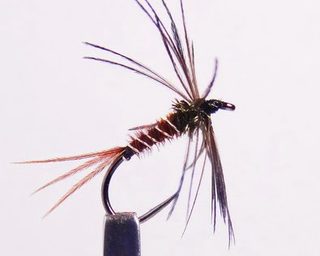
The Sakasa Kebari is without doubt the most recognisable of all tenkara flies, this is why I chose it as my template fly. The simplest of all sakasa kebari that I have seen is the one used by Dr. Ishigaki which consists of only black thread and brown hackle. Using this fly as a template has allowed me to develop patterns to imitate all of the commonly found invertebrates in the streams I fish.
To my knowledge sakasa translates to reversed or upside
down and refers to the forward facing hackle and kebari simple means fly. This
suggests to me that any fly tied with a forward facing hackle is a Sakasa
Kebari. I have dressed many flies intended to loosely imitate caddis, mayfly,
midge & stonefly.
So, is this really a one fly approach ?, well, yes. If all you fished were parachute flies you could say you fish one fly, if you only fished pheasant tail nymphs you could make the same claim however there are many variants are there of these flies. I am fishing only one fly, the sakasa kebari but in many variations.
I have grown up fishing many fly patterns, some that were developed for certain situations, some that were designed to imitate a specific fly and others that were aimed purely at the trout’s aggressive nature. By taking what I’ve learned over many years tying flies in this way and using it to tie variations of the sakasa kebari I feel that I have the best of both worlds.